Tarantula Coloring Pages

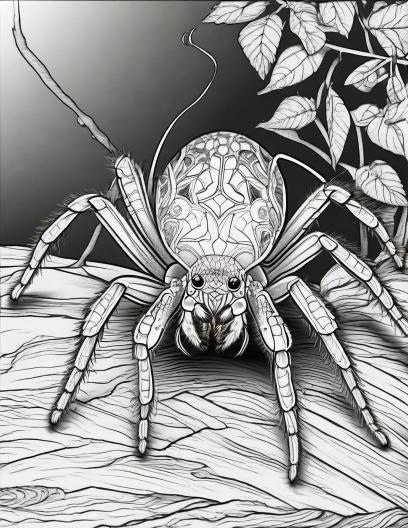
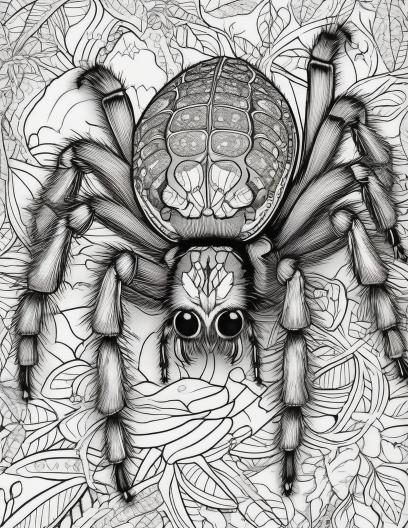
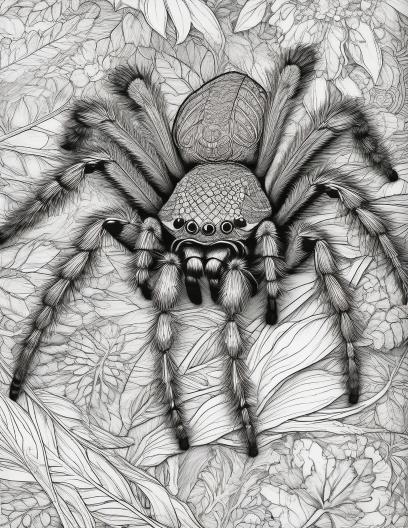
Tarantula coloring pages showcase a meticulous jumping spider with large eyes perched against ornate leaves, and a fuzzy tarantula enveloped by dense, intricate foliage. Both designs blend detailed anatomy with lush botanical surroundings, inviting precision in shading and color blending. The collection highlights the contrast between bold spider silhouettes and delicate leaf patterns, offering a balanced mix of texture and composition. The illustrations feature fine linework and generous whitespace, making them suitable for adult colorists.
Create your own Tarantula Coloring Pages
Can't find the exact unicorn scene you're looking for? Describe your idea with just a few words in our AI Coloring Page Generator and get a custom, ready-to-color image instantly. Bring your own unique visions to life now.

"A tarantula dressed as a superhero, flying through a city made of candy."
Create Now"A tarantula hosting a friendly tea party with colorful insects on giant leaves."
Create Now"A tarantula DJ playing music at a disco party with dancing animals all around."
Create Now"A tarantula explorer with a backpack, discovering a magical forest filled with giant mushrooms and sparkling streams."
Create NowTarantula Color Palette: What colors should I use?
For a tarantula coloring page, you might consider using deep blacks and browns for the body to capture its natural appearance. Adding shades of vibrant orange or yellow on the legs can create a striking contrast, while teal or green can be a fun choice for the background, adding a touch of vibrancy. You might also use soft grays to create shadows and depth, enhancing the three-dimensional effect of the spider.
Color your drawing
|
|
Black |
|
|
Brown |
|
|
Orange |
|
|
Yellow |
|
|
Teal |
|
|
Green |
|
|
Gray |
How to Color a Tarantula Drawing: Tips & Tricks
-
Texture Representation: Consider how to depict the unique texture of a tarantula's exoskeleton. Use different shading techniques to convey the glossy, hairy, or rough surfaces, paying attention to the direction and density of the hairs.
-
Habitat Elements: Incorporate elements from the tarantula's natural environment, such as leaves, rocks, or soil. Color these elements to create contrast with the tarantula and to enhance the overall scene, considering how the colors mimic shadows and highlights in nature.
-
Lighting and Shadows: Decide on the light source in your drawing. Use highlights to accentuate the tarantula's body and shadows to create depth, ensuring the lighting is consistent throughout the piece to enhance realism and dimensionality.
Related Coloring Pages
If you liked our tarantula coloring pages, you may also enjoy these sheets about spiders , caterpillars , dragonflies , ladybugs , butterflies , ants , cacti or bees .